Call grows for comprehensive international health law post-pandemic
Need for a global health law in the wake of COVID-19 and WHO’s new pandemic treaty
- By Gurmehar --
- Monday, 11 Aug, 2025
The Covid-19 pandemic proved a truth the world had been ignoring for decades — diseases do not respect national borders. What starts in one corner of the world can quickly spread everywhere, bringing death, economic disruption, and social distress.
Until now, public health has mostly been treated as a national responsibility. Each country made its own laws and policies, with only light cooperation through bodies like the World Health Organization (WHO). The main international health rules — the International Health Regulations (IHR) of 2005 — were a step forward from the older 1969 version. They expanded the focus from just a few specific diseases like cholera, plague, and yellow fever to a broader set of threats. But they still relied heavily on voluntary compliance.
When Covid-19 struck, this loose system fell short. Countries acted in isolation, competed for scarce medical supplies, and sometimes kept information to themselves. The result was chaos: delays in response, unequal vaccine access, and avoidable loss of life.
In technical terms, the IHR 2005 is “soft law” — non-binding rules, guidelines, and recommendations. Without strong enforcement mechanisms, countries can ignore them without facing real consequences. Covid-19 proved we need more than just suggestions; we need a binding global agreement with clear obligations, enforcement, and fairness.
A new vision: health as a global commons
International law already treats certain areas — the high seas, Antarctica, outer space, and the deep seabed — as “global commons.” These are resources beyond national borders, meant to be managed for the benefit of all humanity. The same thinking should apply to global public health.
If we view health as a shared global resource, then all countries would have obligations to cooperate, share data, and ensure equitable access to treatments, vaccines, and diagnostics during a crisis. This approach shifts the mindset from “every country for itself” to “we are all in this together.”
Covid-19 offered a few glimpses of this principle in action. One of the best examples was India’s Vaccine Maitri programme. Launched in January 2021, it sent millions of vaccine doses to over 90 countries — from Africa and Asia to Latin America and the Caribbean. This was health diplomacy in action, guided by the Indian ethos of Vasudhaiva Kutumbakam — “the world is one family.”
By prioritising poorer countries that could not secure vaccines on their own, India demonstrated what equitable health governance could look like. In the future, such acts could be formalised in a binding treaty — with rules on technology transfer, patent waivers, and fair distribution of essential supplies.
The WHO pandemic agreement: a chance to fix the gaps
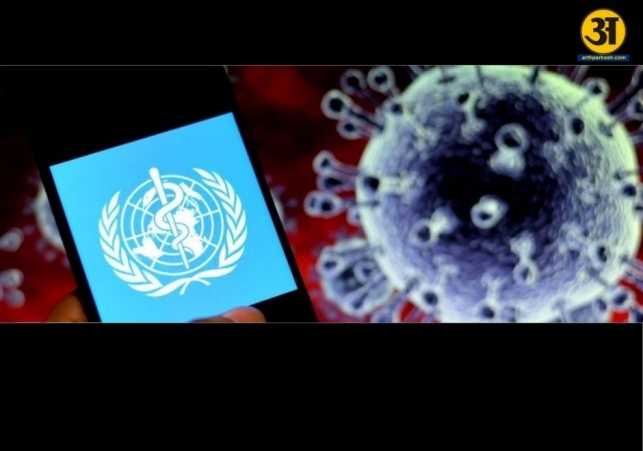
After seeing the failures of the Covid-19 response, WHO Member States agreed that a permanent solution was needed. In December 2021, they began work on what is now being called the WHO Pandemic Agreement.
The treaty’s aim is simple but ambitious: to make sure the world is better prepared for the next pandemic — and that no country is left behind in its response. It would cover prevention, preparedness, and equitable access to health products like vaccines, medicines, and diagnostic tools.
Negotiations began in February 2022 with the creation of the Intergovernmental Negotiating Body (INB). Over the past three years, there have been 13 formal negotiation rounds and many informal consultations. Each step has involved difficult debates:
-
How to balance national sovereignty with global obligations.
-
How to fund preparedness efforts fairly.
-
How to ensure that poorer nations are not last in line for vaccines and medicines.
In May 2024, the INB submitted its first draft to the World Health Assembly (WHA) — the decision-making body of the WHO. By May 2025, the final draft was ready for consideration at the WHA’s 78th session. The draft addresses the biggest failures of the Covid-19 response:
-
Lack of early warning systems and rapid response teams.
-
Unequal access to essential medical products.
-
Weak funding for preparedness.
-
Insufficient global coordination.
If adopted, the treaty could mark a historic shift in how the world handles health emergencies — moving from voluntary cooperation to a structured, enforceable system.
ALSO READ: How Trump’s tariff tirade may be fueling a Russia-India-China troika revival | Explained
ALSO READ: How many times should you tie the Rakhi thread? Understanding the tradition behind it
Why India should lead in shaping the treaty
India has both the moral authority and the practical experience to be a leader in this process. Our Vaccine Maitri programme won global respect, showing that even in the middle of a domestic crisis, a country can think beyond its borders. We have one of the world’s largest vaccine manufacturing capacities and a strong pharmaceutical sector.
By actively pushing for equitable access, technology sharing, and fair funding in the treaty, India can ensure that the final agreement is not just another piece of paper, but a real tool for justice. This is also an opportunity to expand India’s role as a “rule-shaper” in international law, rather than a rule-follower.
However, leadership also means walking the talk at home — by investing more in public health infrastructure, research, and manufacturing capacity. Without strong domestic systems, it is hard to lead by example.
The Covid-19 pandemic was a wake-up call. It showed us that even wealthy countries can be overwhelmed and that ignoring global cooperation is dangerous. The WHO Pandemic Agreement offers a once-in-a-generation chance to fix the weaknesses in our global health system.
If the world treats health as a global commons — like clean air or safe seas — and enforces shared obligations through a binding treaty, we can avoid repeating the chaos of 2020. For India, it is an opportunity to cement its role as a responsible global power, guided by the principle that in a connected world, no one is safe until everyone is safe.
The lesson from Covid-19 is clear: the next pandemic is not a question of “if,” but “when.” The time to build the legal and cooperative framework is now — before the next crisis begins.
Related News